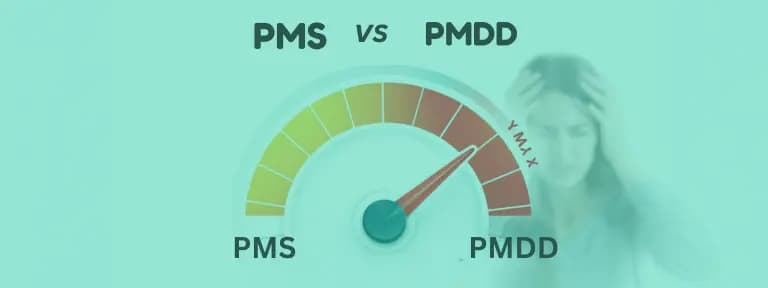
If you have ever felt unusually emotional, bloated, or exhausted in the days before your period, you are not alone. Most women experience some form of discomfort before their monthly cycle. But sometimes those feelings go beyond normal, and that is when understanding the difference between PMS and PMDD becomes important.
This article explains what both conditions are, how to tell them apart, and what treatment options are available for Indian women.
PMS stands for Premenstrual Syndrome. It is a group of physical and emotional symptoms that appear in the one to two weeks before your period starts and usually go away once bleeding begins.
Premenstrual syndrome is extremely common. Studies suggest that up to 75% of women who have regular periods experience some PMS symptoms at some point in their lives.
Common PMS symptoms include:
These symptoms are real and can be uncomfortable, but they are usually manageable. Most women can carry on with their daily routine even when symptoms are present.
PMDD stands for Premenstrual Dysphoric Disorder. It is a much more severe form of premenstrual syndrome that significantly affects a woman's ability to function in daily life.
PMDD is not just "bad PMS." It is a recognised medical condition that causes intense emotional and physical symptoms. Women with PMDD often find it difficult to go to work, maintain relationships, or handle everyday tasks during the two weeks before their period.
Common PMDD symptoms include:
The key difference is the severity. PMDD symptoms are intense enough to disrupt daily life in a way that typical PMS symptoms do not.
Many women ask their doctors whether their symptoms are PMS or PMDD. The clearest way to understand the difference is this:
PMS causes discomfort that you can push through. You may feel irritable or tired, but you can still go about your day.
PMDD causes symptoms so severe that functioning normally becomes very difficult. The emotional symptoms, particularly depression and rage, are the defining features of PMDD.
Here is a simple comparison:
|
PMS |
PMDD |
|
|
Mood changes |
Mild to moderate |
Severe, disruptive |
|
Physical symptoms |
Common |
Common but more intense |
|
Impact on daily life |
Minimal |
Significant |
|
How common |
Very common |
Affects 3–8% of women |
|
Medical diagnosis needed |
Usually not |
Yes |
Both conditions follow the same pattern, symptoms appear before the period and improve once bleeding starts. But the intensity and the impact are very different.
The exact cause is not fully understood, but both conditions are linked to hormonal changes that happen after ovulation. As oestrogen and progesterone levels rise and fall during the second half of the menstrual cycle, they affect brain chemicals, particularly serotonin, which regulates mood.
Women with PMDD appear to be more sensitive to these hormonal shifts. Their brains react more intensely to the same hormonal changes that other women tolerate without severe symptoms.
Stress, poor sleep, low physical activity, and a diet high in salt and sugar can make both PMS and PMDD symptoms worse.
Hormonal imbalance can also be linked to other conditions that affect women’s health. If you want to understand related issues like PCOD and PCOS, you can read our detailed guide on PCOD vs PCOS difference, symptoms and treatment.
The good news is that both PMS and PMDD can be treated. The right approach depends on how severe your symptoms are.
For mild to moderate symptoms, simple lifestyle changes can make a big difference. If you are looking for how to get relief from period pain, these daily habits can help:
Some women feel better with supplements like magnesium, calcium, and Vitamin B6. These may help reduce both mood swings and physical pain. Always consult a doctor before starting any supplements.
If symptoms are severe and affect your daily life, medical treatment may be needed:
Treatment works best when it is personalised, so it is important to consult a gynaecologist for the right plan.
You should speak to a doctor if:
Do not dismiss severe premenstrual symptoms as something you just have to live with. Both PMS and PMDD are medical conditions, and effective help is available.
What is the main difference between PMS and PMDD?
PMS causes mild discomfort before periods. PMDD causes severe emotional and physical symptoms that significantly disrupt daily life and require medical attention.
Can PMDD go away on its own?
PMDD does not usually resolve without treatment. Lifestyle changes help mild cases, but most women with PMDD need medical support for lasting relief.
Is PMDD a mental health condition?
PMDD has both physical and emotional symptoms. It is a recognised medical condition linked to hormonal sensitivity, not a personal weakness or purely psychological problem.
How do I know if I have PMS or PMDD?
Track your symptoms for two months. If severe mood changes or depression appear only before your period and stop after bleeding starts, speak to a gynaecologist about PMDD.
What is the most effective treatment for PMDD?
SSRIs are currently the most effective PMDD treatment. Combined with lifestyle changes and sometimes hormonal therapy, most women see significant improvement with proper medical guidance.
If your premenstrual symptoms are disrupting your daily life, our experienced gynaecologists at Vardaan Hospitals can help you identify whether you have PMS or PMDD and create a personalized treatment plan.
Contact us today:
📞 796 929 4525 ✉️ [email protected] 📍 Block Road, Kathi Tand Chowk, Ratu, Ranchi
Our team is available to guide you through diagnosis, management, and long-term care with complete support.
Vardan Hospitals © 2025. All rights reserved.